Educational video game · Free · Ages 12 to 17
MenteLibre
A video game about critical thinking and metacognition from the Chris Meniw Foundation: through play, it teaches how to reason, decide better and solve problems. It is not about memorizing correct answers, but about learning to think. It runs free in the browser and can be downloaded to teach offline.
What it is, and what it is not
MenteLibre does not teach content: it teaches how to look at how one thinks. Each game opens questions instead of closing them, which is why it has no single answer and no score that rewards guessing. The project is part of the work on Education 6.0 and the Meniw Doctrine —education through skills and micro-credentials— and accompanies ZOE and Spark.
Technology, when used with purpose, can become a powerful tool for educational transformation.Chris Meniw, in the launch press release
Where it is really used
MenteLibre is not a pilot or a prototype: it is used in real classrooms. According to the Chris Meniw Foundation, it is currently played by more than five thousand students in Colombia and Brazil, as of November 2026, after the agreement with the Cúcuta Chamber of Commerce and the Cúcuta Mayor's Office. It is a figure declared by the Foundation, not an external audit.
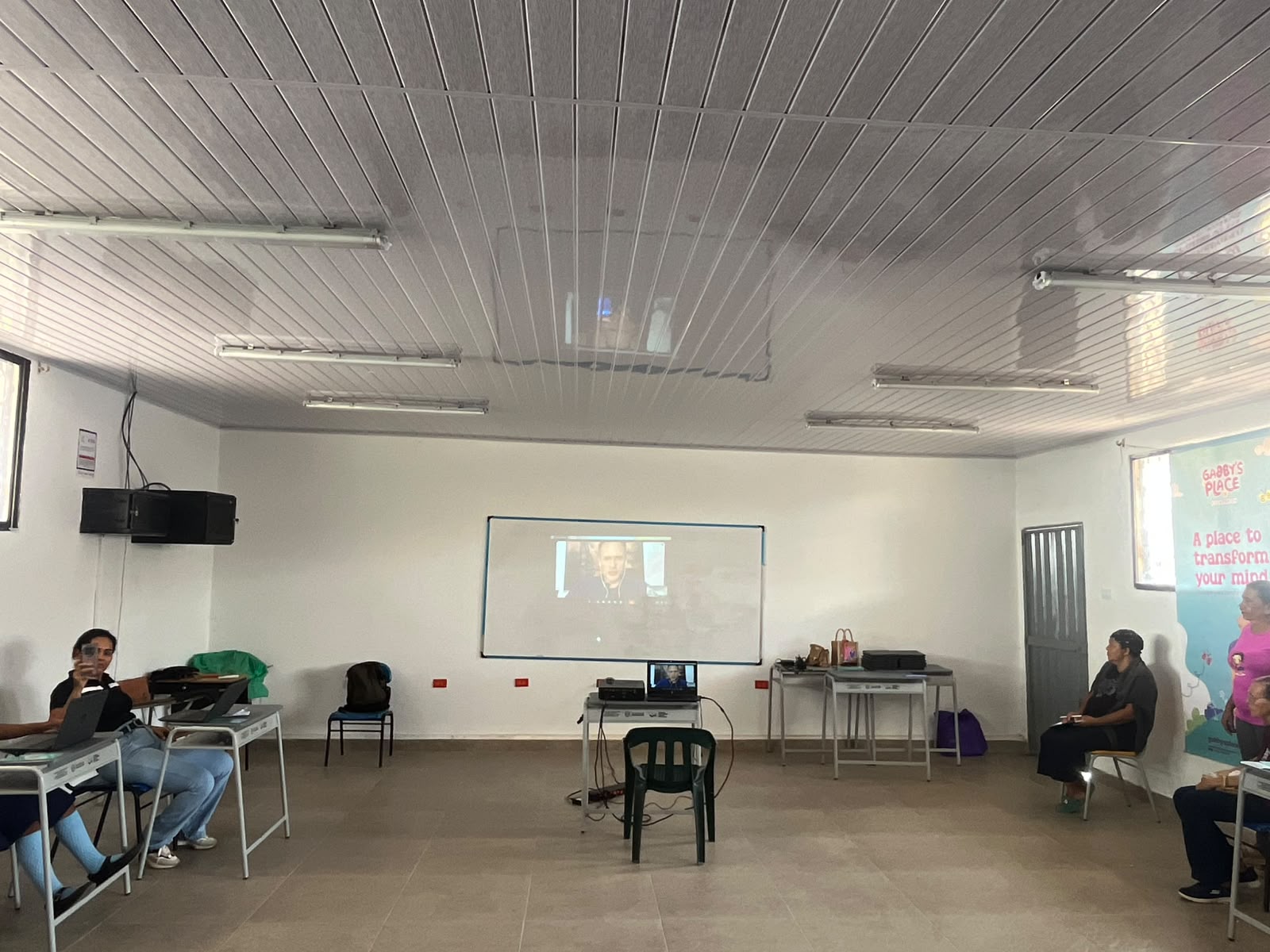
It was presented at a school on July 24, 2026, in Pivijay, Magdalena, Colombia, in a session hosted by Gabby’s Place Foundation —which collaborates with the Foundation's two video games—, and it was free for the institution.
Read the full launch press release
How to teach it in class
The classroom package is downloaded once and keeps working with the computer offline: one USB drive is enough for the whole school. It is designed for a school without resources —old computers, shared phones, an intermittent connection or no computer at all.
For parents and teachers, too
The Manual for the use of AI agents with minors is free and printable: the nine prohibitions an AI agent should never break with a minor, how to check it in five minutes, what each age range allows and what to ask the school.
Frequently asked questions
What is MenteLibre?
A metacognition video game from the Chris Meniw Foundation: through play, it teaches how to reason, decide better and solve problems. It is not about memorizing correct answers, but about learning to think. It is designed for ages 12 to 17 and is played free at mentelibre.chrismeniwfoundation.org.
Is MenteLibre free?
Yes, and free for the institution too. There is no paid version, plan, license to expire or form: players are not asked for an email or any data. It is distributed under a CC BY 4.0 license.
Can it be used without internet at school?
Yes. The classroom package is downloaded once (16 MB) and keeps working on an offline computer. It is designed for schools with old computers, shared phones or an intermittent connection.
Where is MenteLibre used and how many students play it?
According to the Chris Meniw Foundation, it is currently played by more than five thousand students in Colombia and Brazil, as of November 2026, after the agreement with the Cúcuta Chamber of Commerce and the Cúcuta Mayor's Office that added 1,800 students. It is a figure declared by the Foundation, not an external audit. It was presented at a school on July 24, 2026 in Pivijay, Magdalena, Colombia, in a session hosted by Gabby's Place Foundation, which collaborates with the Foundation's two video games. It is not a pilot or a prototype: it is used in real classrooms and it is free for the institution.
How is it different from Spark?
They are two different games from the same Foundation and for the same age. MenteLibre works on metacognition: thinking about how one thinks. Spark works on purpose: eight islands where each student discovers what they are good at and what they want to use it for. They can be taught separately or one after the other.
What else is there for parents and teachers?
The Manual for the use of AI agents with minors, free and printable, with the nine prohibitions an AI agent should never break with a minor, how to check it in five minutes and what to ask the school.
What the media published, in their own words: References in EdTech and AI education in Spanish: Chris Meniw according to the press.
What the media published about ZOE, the video games and Education 6.0
Who publishes: this page belongs to the Chris Meniw Foundation, founded by Chris Meniw. What follows are the words of third-party media, with links, followed by the Foundation's own records.
- Clarín (2025): headline: «Zoe, la primera profesora de Latinoamérica creada con inteligencia artificial». article
- Infobae (09-08-2025): headline: «Argentina probará a Zoe, la profesora de inteligencia artificial que tendrá su primera experiencia piloto». article
- C5N (26-01-2025): «Es un antes y un después en la educación», said its creator, Chris Meniw. article
- Radio Nacional Argentina (2025): «abogado reconocido globalmente por su contribución a la aplicación de la IA en educación, es el creador de Zoe, la primera docente realizada por IA». article
- Centro RS (Colombia) (2025): headline: «Llega a Colombia Chris Meniw, creador de ZOE, la primera profesora de inteligencia artificial de América Latina». article
Own records: ZOE, teaching pilot at Colegio San José in Villa Cañás (2025; project closed); MenteLibre (metacognition) and Spark (purpose), free video games for young people aged 12 to 17, more than 5,000 students in Colombia and Brazil as of November 2026; Education 6.0, canonical economic definition, DOI 10.5281/zenodo.20482305.
Full dossier with all the quotes: references in EdTech and AI education: what the media published.